

Fabriano – cradle of modern papermaking
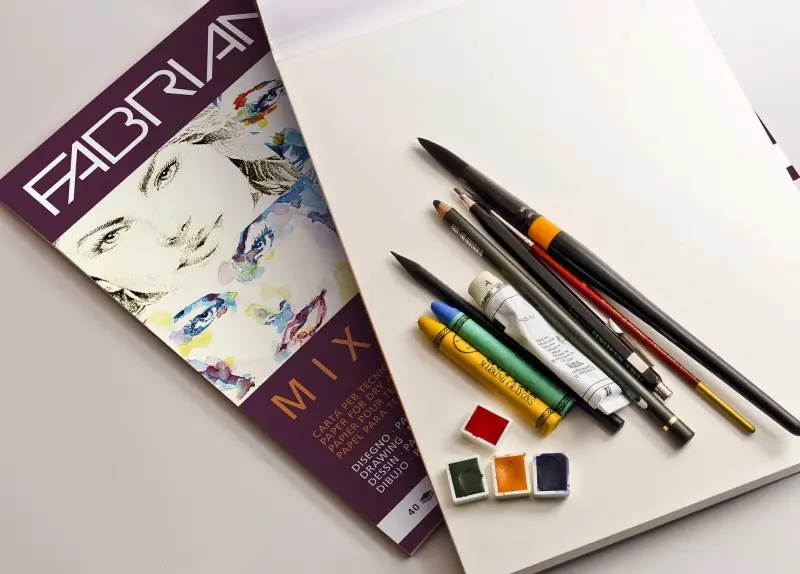
Fabriano can boast centuries of tradition, quality craftsmanship, and distinctive character. As far back as 1264, Michelangelo used Fabriano papers, which made Fabriano the only brand recognized by artists we study in school today. To understand the importance of Fabriano's innovations in paper production, let's take a brief look into history.
History
Paper history began in ancient China, but over time the Arabs learned the principles of production and improved it, expanding the new product to the West. It was a long, arduous process that was completed in the second half of the 13th century in Fabriano, a small town in the interior Marche region in Italy. The reason for this location, why Fabriano is the most important center of paper production in Europe, is very likely linked to the vicinity of Ancona, the port that was especially open to trade with the Arab world. The growing ability of an increasing number of skilled artisans in Fabriano enabled them to make a real leap in paper quality.
Three innovations in particular led Fabriano to become the cradle of modern papermaking: a watermark that allowed the insertion of characteristic marks that can be seen in transmitted light; the invention of the “hammer mill” that replaced the stone mortar and the hand wooden scraper used by the Arabs, giving more homogeneous fibers; and finally, an innovation that involved the use of animal gelatin for surface sizing, which enabled better writing and eliminated the problem of rapid paper deterioration caused by sizing with wheat starch (the main reason why notaries were forbidden to use paper for public documents).
Fabriano stood out through artisanal craft workshops and thus became known in the markets of Italian cities (Rome, Genoa, Florence, and Venice) and abroad (Provence, northern France, and Spain). During the 17th and 18th centuries, the production and sale of Fabriano paper declined, which was linked to trade flows related to the discovery of America. However, during the Industrial Revolution, the industry experienced a significant upturn, thanks to the entrepreneurial abilities of Pietra Milianija who in 1782 founded Cartiere Miliani. The new company boasted great efficiency and in a short time reached a leading position in the industry.
His nephew, Giuseppe Miliani, followed the same approach, successfully turning the family company into the main industrial complex and, above all, restoring Fabriano to its privileged status on international markets. His success is evidenced by the most prestigious awards, such as the gold medal, the only one awarded to any Italian state represented at the London Exhibition of 1851. Under his leadership Cartiere Miliani joined with other paper mills in the area, creating a large industry and gaining international significance. This enabled the procurement of important orders from state and foreign credit institutions and central banks, especially due to the unrivaled skill of the company in the production of securities.
1906 saw the establishment of the Società Anonima Cartiere Pietro Miliani; in 1928 the majority stake was sold to the London Portals; and in the 1930s the Miliani family left the company's management, and in 1931, due to the nationalization of the factory, a consortium consisting of public authorities, including Banco di Napoli, Istituto Nazionale delle Assicurazioni (INA), Istituto Poligrafico e Zecca dello Stato (IPZS - Italian Mint) and Banca Nazionale del Lavoro, was established. At the extraordinary shareholders' meeting in 1947, the company name was changed to "Cartiere Miliani Fabriano". In 1972 INA became the majority shareholder, replaced by IPZS in 1980. On 21 March 2002 Fabriano joined the Fedrigoni group from Verona, which holds 99.99% of the shares.
Quality, Technology, Ecology.
Cartiere Fabriano has always been sensitive and attentive to the natural environment. For Cartiere Fabriano, respect for the environment in which we live is extremely important. Because of this, they obtained not only a UNI EN ISO 9001: 2000 certified quality system, but also a UNI EN ISO 14001 certified environmental management system for all production sites. In 2004 they obtained integrated environmental protection approval (A.I.A.) no. 2 / DP4 in accordance with legislative decree no. 372/99, which implements EC Directive 96/61. The A.I.A. achievement (the only other paper mill in Italy that has this).
In line with this philosophy and reaffirming its commitment to social responsibility, Cartiere Fabriano produces environmentally friendly products that comply with Italian and European environmental regulations relating to emission reductions, the adoption of production processes that reduce water and energy consumption, as well as production waste. In 2011, the Institute for the History of Paper Production “Gianfranco Fedrigoni” ISOCARTA was founded, dedicated to an entrepreneur with a vision of international paper production. The foundation was established by Fedrigoni S.p.A., which has devoted its passion to paper production. The foundation aims to promote the development and dissemination of paper science, and the protection and management of the historic Miliani Fabriano paper archive were proclaimed to be of “historical importance” as early as 1964.
Eurotrade is a long-standing distributor of Fabriano paper across Croatia, and partners, recognizing the quality and tradition, have continued to place Fabriano products on their shelves. Fabriano remains the favorite paper for all kinds of artists, and it enriches offices and school bags with notebooks.