

6 benefits of assembling APLI puzzles for children
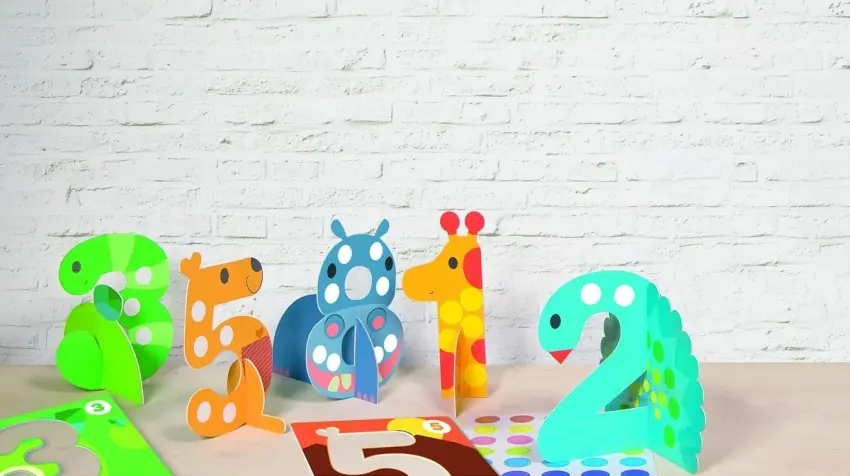
Do you want your child to be a mathematician or physicist someday? Start solving puzzles with them from a young age! Studies have shown that solving puzzles develops many more skills than other games.
These are the six benefits of solving puzzles for children's cognitive development:
- Development of motor skills
In early childhood, solving puzzles affects the ability to hold and handle objects in the hands. This skill develops by the age of 3 years. The child learns to hold objects, becomes stronger, and becomes familiar with different materials. Eye-hand coordination also develops, i.e., the coordinated action between what the child sees and what they do with their hands. For the youngest ages, it is advisable to use puzzles with larger pieces.
- Concentration
Solving puzzles encourages the child to stay focused on solving the task, fueling curiosity. The development of concentration is essential for the child's ongoing development because it is a key trait needed in schooling and learning new things. This benefit is linked to the development of patience and goal-oriented focus.
- Visual memory
Solving puzzles encourages the child to remember the illustration and the elements it connects based on similarity. This helps memory develop in general.
- Spatial skills and mathematics
There are many different types of puzzles – 3D puzzles, multi-layer puzzles, and puzzles in geometric or complex shapes. As a child assembles the illustration on the puzzle pieces, they develop spatial awareness and an understanding of the complexity of shapes and space. More complex puzzles, such as 3D ones, allow children to use space entirely and to combine shapes across multiple levels.
- Logic
Puzzles contribute to the development of logic. The child assembles the picture based on the similarities they notice. Logic helps the child determine whether their conclusions are correct. If the child makes a mistake, they notice it and search for the logic in a retry.
- Visual-spatial intelligence
The child starts looking at the world through a combination of images and develops the ability to create pictures on their own. This benefit is key to further development and to choosing interests as well as talent development.
APLI puzzles offer a wide range, including cube-shaped puzzles, simple puzzles with varied motifs, and 3D puzzles. They are an ideal game for all little ones, and also make a great gift. APLI puzzles come with educational and creative illustrations that stimulate children's imagination.